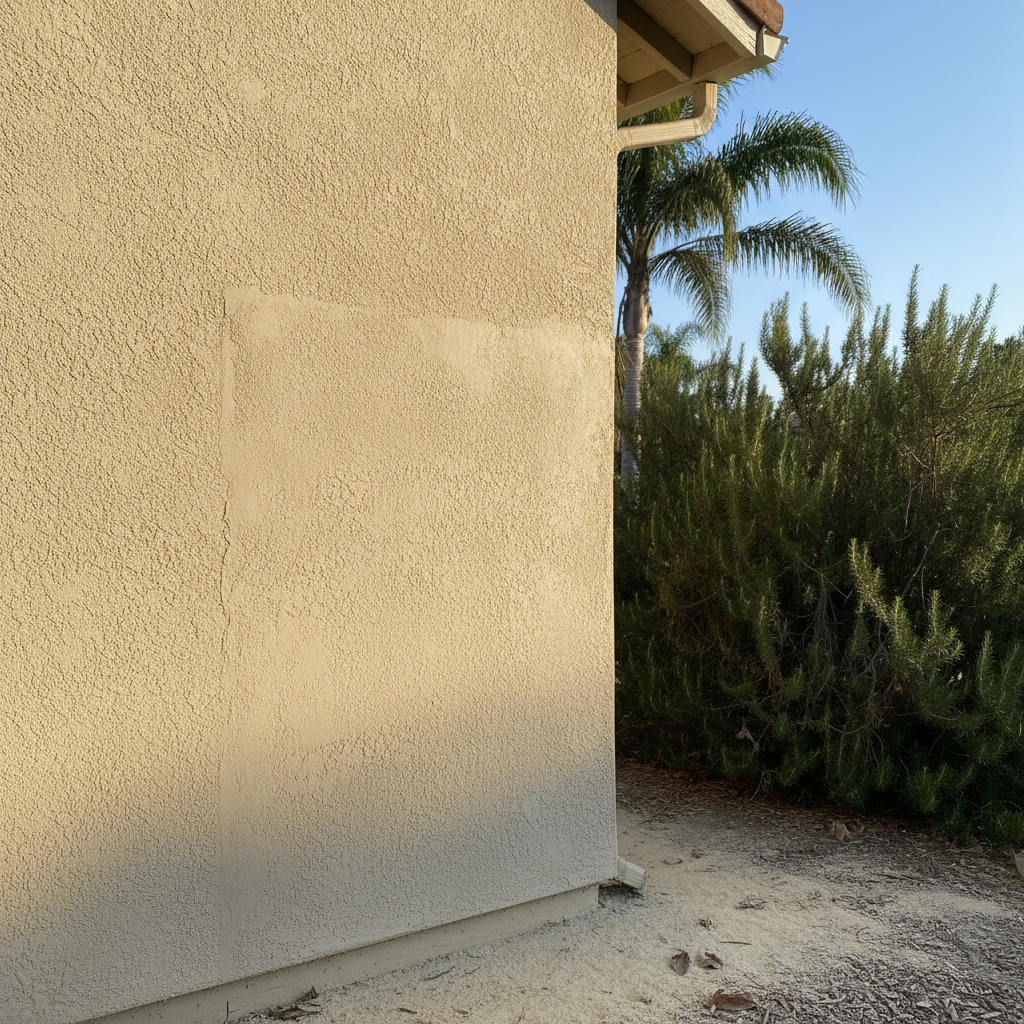
Stucco takes a beating out here in Sherman Oaks, CA, between the blazing summer heat and the occasional ground shift. Over the years running Los Angeles Stucco Services, our team has heard just about every question a homeowner can ask when their exterior starts looking tired. These common stucco questions help homeowners in Sherman Oaks know what they are dealing with when stucco damage occurs.
How can I tell if a crack in my stucco is structural or just cosmetic?
Hairline cracks are totally normal. They usually happen because the base coat is settling or the extreme heat we get in Sherman Oaks is making the material expand and contract. If a crack is thinner than a credit card, you are generally looking at something cosmetic. But the moment you can slide a nickel into that gap, or if you see diagonal stair-step cracking near windows and doors, pay attention. That usually points to framing movement or foundation settling. Do not just slap caulk on those bigger ones until you figure out what is moving underneath.
Can I patch small stucco holes myself, or do I need to call a pro?
You can definitely handle tiny dings and nail holes on your own. Grab a tub of pre-mixed acrylic patch from the hardware store, push it in with a putty knife, and texture it to match. But here is the catch: matching the surrounding texture is an art form. If your house has a heavy Spanish lace or a subtle sand finish, a patch that looks smooth will stick out like a sore thumb from ten feet away. For anything larger than the palm of your hand, you will save yourself a lot of frustration by letting Los Angeles Stucco Services feather it in properly.
Why is my stucco turning a powdery white color?
That powdery white stuff is called efflorescence, which is a white powdery substance. It happens when moisture gets trapped behind the stucco, dissolves natural salts in the cement, and pushes them to the surface as the water evaporates. While our Valley weather is mostly dry, we do get sudden downpours in the winter, and lawn sprinklers hitting the base of your walls day after day will do it too. You can scrub it off with a stiff brush and a vinegar-water mix, but if it keeps coming back, you have got a moisture intrusion problem that needs tracking down.
How long should a good stucco repair actually last?
If Stucco Repair is done right, a patch or repair should last as long as the rest of your wall, which is 15 to 20 years or more. That means cutting out the damaged material properly, bonding it to a clean substrate, and applying the right mix of scratch coat, brown coat, and finish coats. Too many handymen just skim over old, crumbling stucco without fixing the root cause, and you will see the exact same crack pop up again after the first heavy winter rain.
Will a patched area stick out like a sore thumb against my old walls?
Fresh stucco is always darker when it goes on, and it takes time to cure and lighten up. Even with a perfect color match, an older home that has been baked by the Southern California sun for twenty years will have faded paint and weathered aggregate. That is why most professional Stucco Repair work requires painting the entire wall plane, or at least blending the finish carefully and applying a matching elastomeric coating over the top to tie everything together uniformly.
What causes stucco to sound hollow when I tap on it?
That hollow sound means the stucco has delaminated, which is a polite way of saying it has popped loose from the wire mesh and paper backing underneath. This often happens near the roofline or close to windows where flashing failed years ago, allowing moisture to rust out the metal lath. If you push on a hollow spot and it gives way, you are looking at Stucco Repair where Los Angeles Stucco Services has to cut out the dead material, replace the rusted mesh, and start fresh from the scratch coat up.